Imbolc: When the Flame Calls Us Back
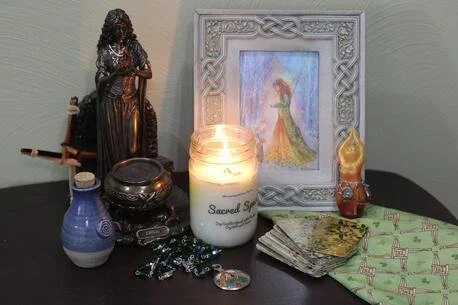
Imbolc arrives quietly.
The land may still be frozen. The days are only just beginning to lengthen. And yet—beneath the surface—something has already shifted. Life has turned toward the light.
Imbolc is not a festival of arrival.
It is a festival of becoming.
“IImbolc marks the moment
when life has already chosen to return,
even if nothing yet appears changed.”
For me, Imbolc has never been abstract or symbolic alone. It has been lived devotion. For the past four years, I have served as Abbess of Ord Brighideach—a living devotional order dedicated to tending Brighid’s flame through prayer, service, and seasonal vigil. In this role, I hold the flame not just for myself, but for a community of flame keepers spread across many lands.
And if I am honest, there have been moments when the weight of that responsibility felt heavy. Moments when I wondered if it was time to lay the mantle down and let another carry it forward.
And each time, she has called me back.
Not with command.
But with remembrance.
Brighid does not demand devotion. She awakens it.
The True Meaning of Imbolc
Imbolc is often described as a fire festival, a celebration of returning light, or the quickening of the land. All of this is true—but incomplete.
At its heart, Imbolc is about tending what has been kept alive in the dark.
It is the moment when we realize that something within us survived the winter.
A prayer we kept whispering.
A truth we refused to abandon.
A calling that would not release us, even when we tried to step away.
Brighid is known as the keeper of the hearth flame, the fire of the forge, and the spark of inspiration. Healing, transformation, and voice all live within her domain. At Imbolc, these fires are not blazing—they are being kept.
Imbolc teaches us that devotion is not about constancy without struggle. It is about returning—again and again—to what is essential.
This is Brighid’s way.
“Devotion is not proven by certainty,
but by willingness to return
when the path feels heavy.”
She is the flame that does not burn wildly, but steadily. The fire that warms the hearth, tempers the metal, and ignites the poet’s breath. Through Imbolc, Brighid teaches us how to remain faithful without becoming rigid—how to tend what matters without hardening around it.
When the Path Feels Heavy
There is a moment many who walk a devotional path encounter—the moment when the work feels too large, the responsibility too visible, the holding too constant. I have stood in that place more than once.
There have been nights when the house was quiet, the world stilled, and I stood alone before the flame—lighting it not for ceremony, but for continuity. Reading prayers offered by others. Holding intentions that were not my own. Tending the work even when no one was watching.
And yet, when I have tried to step away, Brighid has always met me there—not with judgment, but with a gentle reckoning:
Look at who you were before I found you.
Look at who you have become.
Imbolc is not only about the land awakening.
It is about recognizing how we have changed by what we have tended.
“What we tend shapes us as surely as we shape it.”If something keeps calling you back, it is not asking for your sacrifice.
It is asking for relationship.
Why Imbolc Matters Now
Imbolc comes when the work of winter is not yet finished, but the direction has already turned.
“Threshold seasons ask for
steadiness, not urgency.”
It reminds us that not all meaningful work is seen, that tending is as sacred as creating, and that what endures is often shaped quietly. Imbolc is a counter-teaching to urgency. It restores us to a pace where faithfulness is possible.
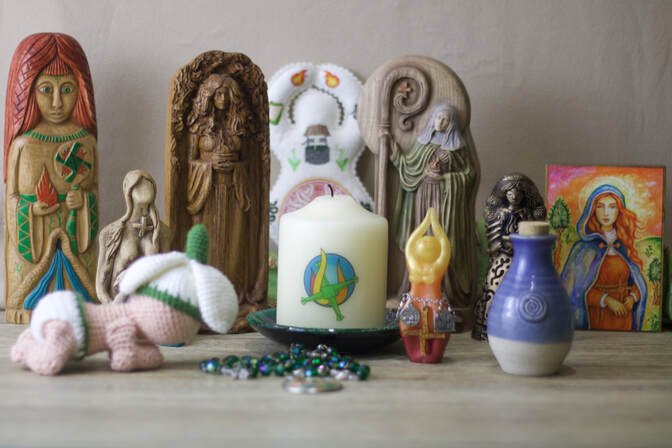
Devotion at Imbolc
Imbolc devotion does not require elaborate ritual or perfection. It requires sincerity.
This is a time to return to simple acts that carry great meaning.
"At Imbolc, devotion is measured
by presence, not performance."
Ways to honor Imbolc and Brighid:
Light a candle at dawn or dusk, even if only for a moment. Let it represent the flame you have kept alive through difficulty.
Cleanse the hearth—your kitchen, your altar, your workspace. Imbolc is a threshold; clearing space invites what is next.
Offer fresh water or milk, traditional symbols of nourishment, purity, and life returning to the land.
Speak a vow softly, not of achievement, but of care. What are you willing to tend this year?
Spend time in quiet reflection, noticing what has begun to stir within you without forcing it into form.
These acts are not about doing more.
They are about listening more closely.
Tending the Flame for Others
“Tending the flame for another
is one of the oldest forms of prayer.”
Imbolc is not only personal—it is communal.
One of the simplest and most powerful acts of this season is to light a flame not for yourself, but for another. To tend hope on behalf of someone who cannot do so alone. To hold prayer where fatigue has made it difficult.
This, too, is Brighid’s work: keeping continuity when others falter, and ensuring that the flame is never entirely extinguished.
Offerings from the Heart
Offerings at Imbolc are best when they are honest.
Brighid does not require abundance—she recognizes intention. A single candle lit with reverence. A poem written imperfectly. A moment of gratitude spoken aloud.
Offerings might include:
Bread or oats
Butter or cream
Spring water
Handwritten prayers
Acts of service done in her name
The most meaningful offering, however, is attention. To notice the subtle shifts. To honor the small signs. To tend the flame even when it feels quiet.
What Imbolc Asks of Us
Imbolc does not ask us to bloom.
It asks us to prepare.
It asks us to stop measuring our worth by what is visible, and to learn how to recognize devotion by what we are willing to tend quietly.
To recognize what has been shaped in the unseen months.
To trust that what has been faithfully tended will emerge in its own time.
To remember that devotion is not proven by endurance alone, but by willingness to remain in right relationship with what we serve.
Each year, when Brighid calls me back to the flame, she is not asking me to be more. She is asking me to be true.
“What endures is rarely loud,
but it is always faithful.”
A Closing Blessing
As Abbess of Ord Brighideach, I have learned that the flame does not belong to us. We belong to it, for a time. And when we tend it well, it changes us forever.
Brighid, keeper of the quiet flame,
teach us how to tend what has endured.
Help us recognize what is stirring,
and trust the timing of its becoming.
The flame is tended in many ways. Some do so alone. Others do so together, in devotion and continuity, as it is held within Ord Brighideach.
May you recognize the fire that has never left you.
May you tend it with patience and care.
And may what is ready to awaken find warmth in your keeping.
Blessed Imbolc.